



In many organizations, physical security consists of well-functioning individual systems. It is only during an incident that it becomes clear whether those systems, processes, and responsibilities also converge into a single, manageable security process.
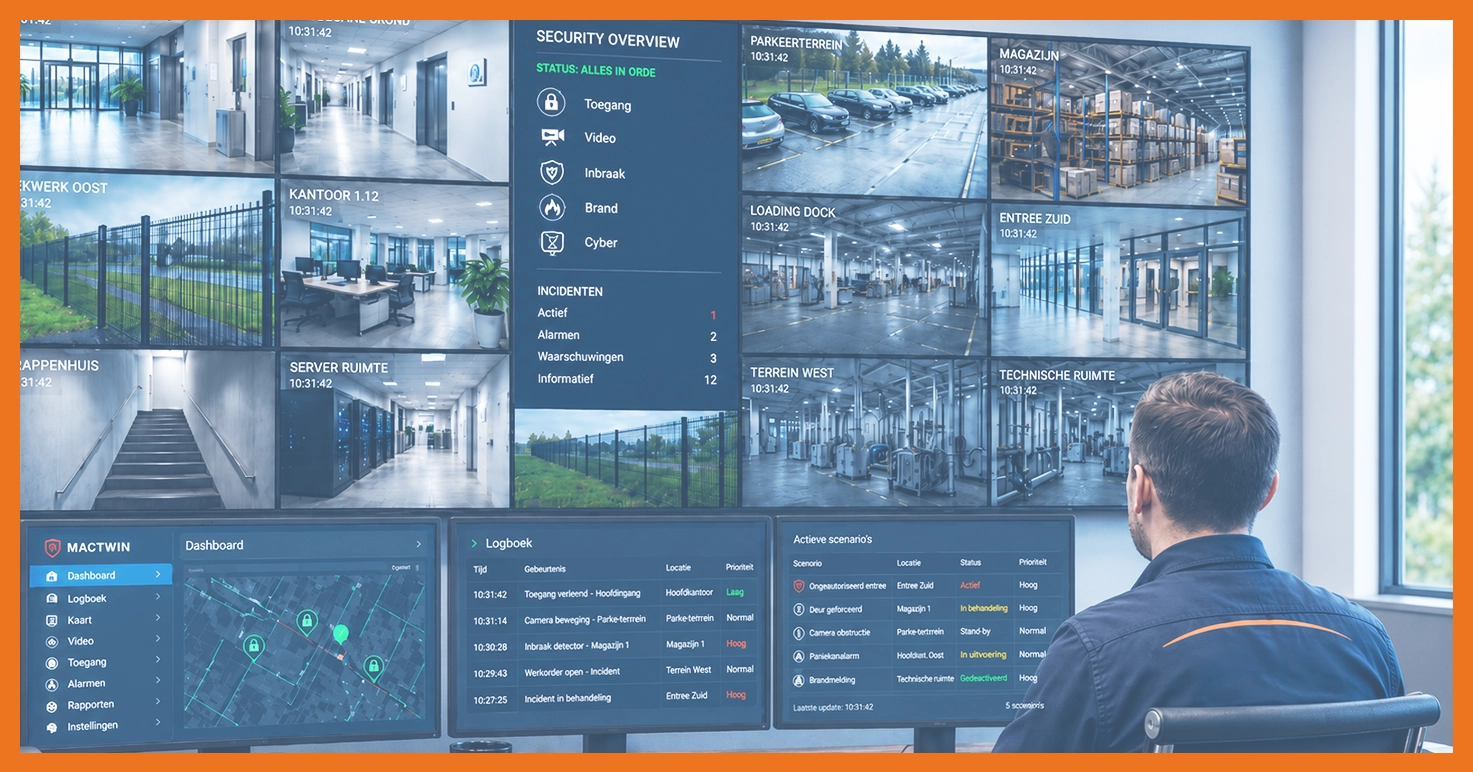
Suppose a critical door is opened outside the scheduled time window. The access control system registers the event, the video management system potentially contains relevant footage, and a detection system generates an alert. The information is available, but it is not always immediately clear what is happening, what risks are involved, and who is assessing the situation.
Which door and zone are involved? Which identity or access badge was used? Is it a technical malfunction, a procedural error, or unauthorized access? And who determines the next step? It is precisely at that moment that it must become clear whether individual security measures also actually function as a single security process.
When an alert must be more than an alarm
Under calm conditions, security systems can function perfectly alongside each other. A door opens, a camera records footage, and an alarm is handled according to the usual procedure.
In the event of sabotage, unwanted access, a threat to employees, or a disruption at a critical location, the situation changes. A standalone alert is then insufficient. The organization must be able to determine under time pressure what is happening, which risks are at play, and what action is required.
The problem is often not that information is missing, but that it is scattered across different systems, screens, departments, and administrators. As a result, it takes time to correlate events. It can also be unclear which information is leading and who is responsible for assessment, escalation, and communication.
A security system therefore only provides real value when it not only signals but also contributes to a careful and timely follow-up.
From signaling to orchestration
Advanced technology can help recognize incidents earlier and investigate them faster. Video verification, live monitoring, video communication during alerts, and analysis with artificial intelligence offer valuable possibilities for this. At the same time, every new system adds data, user rights, dependencies, management work, and alerts. When that information does not come together logically, a better security picture is not created, but rather more noise.
The value of integration therefore only becomes visible when assessment, escalation, and follow-up are also organized. It must be clear in advance who assesses an alert, what information is needed for this, when to escalate, and how internal teams, the control room, and external partners work together.
That is orchestration: not just technically connecting systems, but organizing the entire security process. As soon as multiple locations, systems, user groups, and parties must function as a single entity, the organization must assess whether a central orchestration layer is needed, or if clear process agreements and targeted links between existing systems are sufficient.
PSIM: context around incidents
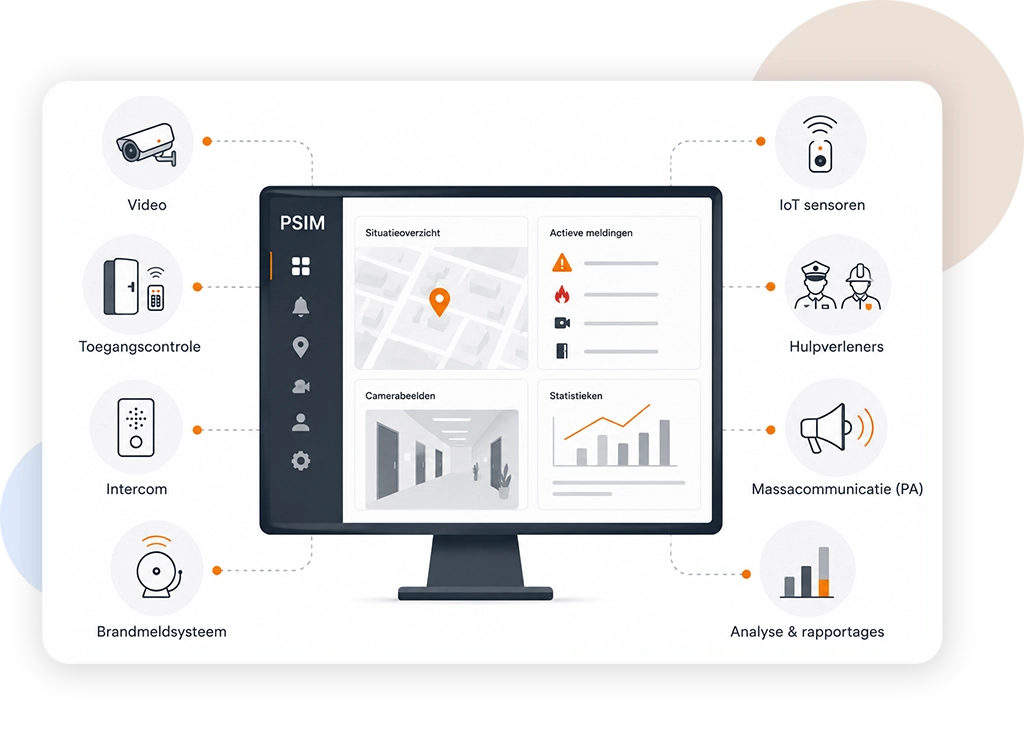
A Physical Security Information Management system (PSIM) brings together alerts and information from different security systems. Think of camera footage, access events, detection alerts, intercom, and other relevant sources. This creates more context around an incident and allows fixed assessment and follow-up processes to be supported.
PIAM: grip on identities and access rights
A Physical Identity and Access Management solution (PIAM) focuses on identities and access rights. It helps centrally manage employees, visitors, contractors, and other external parties. This is not just about granting access, but specifically about changes during a new role, temporary work, different locations, or termination of employment.
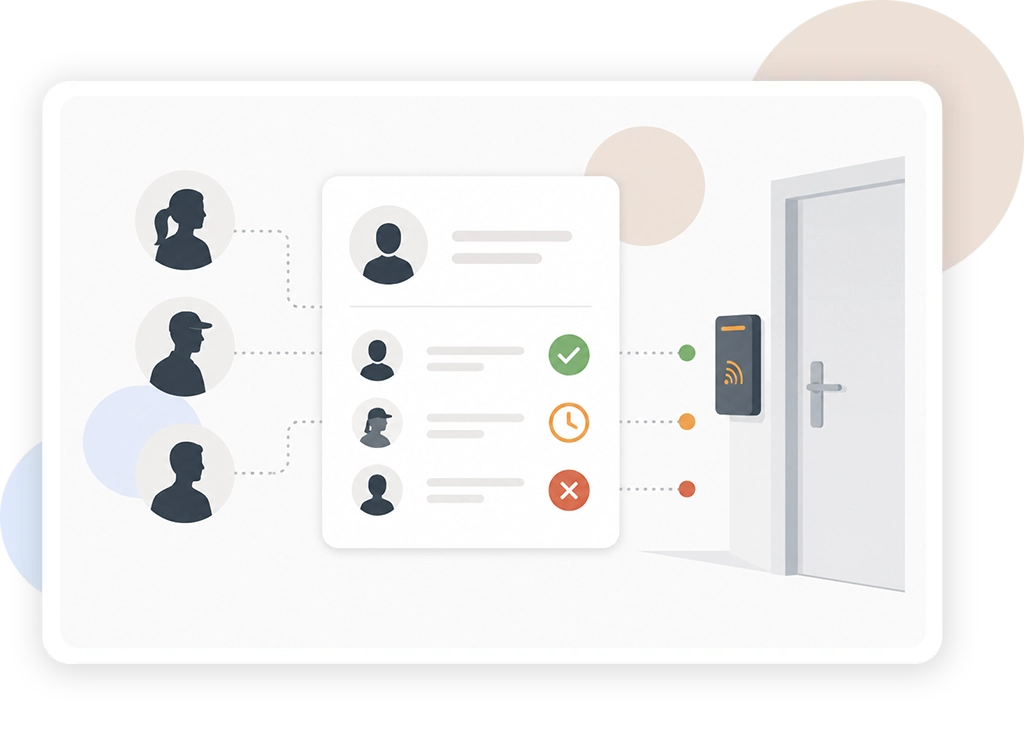
PSIM and PIAM support different challenges: PSIM primarily assists in the operational assessment and follow-up of incidents. PIAM supports the management of identities, roles, and access rights throughout the entire lifecycle. These solutions do not take over responsibilities. They do help organizations execute processes more consistently, make anomalies visible faster, and better record decisions. Which layer is needed follows from the issue: is it primarily incident context, grip on access rights, or cohesion between both that is missing?
Artificial intelligence within a controlled process
Artificial intelligence (AI) is also gaining a larger role within physical security. AI can recognize patterns, signal anomalies, find relevant footage, and help operators prioritize alerts. This is especially valuable in environments with many cameras, multiple locations, or large numbers of events. An operator then does not have to investigate every alert or sequence of images in the same way.
However, an AI alert has little value when it is not clear who assesses it, what information is needed for verification, and when to escalate. In a well-organized security process, AI helps reduce noise and provide context faster. In a poorly organized process, it primarily creates a new stream of alerts and dependencies.
The use of AI therefore requires clear frameworks. What data is used? How is an outcome verified? Which decisions may the system support? Where does human assessment remain necessary? AI can enhance the work of an operator. The responsibility for decision-making and follow-up remains with the organization and the professionals involved.
Physical security is part of digital resilience
Modern security systems are connected to networks, applications, and business processes. As a result, cameras, controllers, intercom systems, and servers are also IT assets.
Since August 15, 2026, the Cybersecurity Act (Cbw), as the implementation of the NIS2 Directive, and the Critical Entities Resilience Act (Wwke), as the implementation of the CER Directive, have been in force in the Netherlands. For organizations covered by this legislation, resilience becomes even more important. It is not just about IT. Physical access, personnel, assets, and the environment in which critical systems are located also play a role. This requires clear ownership. Who manages firmware and accounts? Who monitors external connections and access rights? And what happens in the event of a malfunction or incident?
A vulnerable camera, poorly managed remote access, or a failure in access control can have direct consequences for safety and continuity. Organizations must therefore also know how they will continue to function if systems or connections fail. Good resilience requires more than just technology. Procedures, responsibilities, and incident response must also be in order. Physical security thus directly impacts IT, risk management, and continuity. These disciplines do not need to perform the same work, but they cannot be organized in isolation from one another.
Five questions for a manageable security organization
An organization can test its own setup against five practical questions:
- In the event of an incident, is it immediately clear which information is leading and who assesses the situation?
- Are assessment, escalation, and communication for the most important alert types recorded in advance?
- Are access rights adjusted in a timely manner upon hiring, job change, temporary access, and termination of employment?
- Can alerts, actions, and decisions be reliably reconstructed afterwards?
- Is it clear how the organization continues to function during a failure and who is responsible for management, follow-up, and vendor coordination?
When these questions can only be answered with the help of different departments, separate documents, or multiple vendors, cohesion is likely still missing.
The next step does not automatically have to be a new system. First, map out the five questions per location or process and then determine where ownership, processes, or information provision fall short.