



Who is permitted to enter a critical area? Who approved that access? And how can you be certain that rights expire as soon as an assignment ends? A security system helps regulate access. However, demonstrable control also requires clear responsibilities, appropriate configuration, and consistent management.
This cohesion is vital for organizations that must comply with legislation, regulatory frameworks, and internal security requirements. Effective management of physical security contributes to this by providing insight into how policy is implemented in practice and where adjustments are needed.
Access rights must evolve alongside the organization
Employees change roles, external parties complete assignments, and temporary projects come to an end. Every change can have consequences for access to buildings and rooms.
Without a well-structured process, rights can easily persist. An employee might retain access to a former department, or a supplier may still be able to enter after a contract has ended. The system then simply executes what was once configured, even though the reason for that access has lapsed.
Therefore, for every authorization, it must be clear who approves it, why the access is necessary, and how long it remains valid. Periodic reviews help ensure that rights remain appropriate.

Technology can support this process. Consider temporary authorizations that expire automatically, approval workflows for critical areas, and integrations with HR or contractor data. A change in function or a departure can thus trigger the adjustment or revocation of rights. In this regard, it must be clear which data is authoritative and who evaluates exceptions.
A temporary technician, a verifiable process
An external technician performs maintenance in a critical technical room. The responsible party approves the access in advance for a fixed period. The technician is granted access exclusively to the required zones and, where required, under supervision. Upon completion, the authorization expires automatically. If the work takes longer, an extension requires a new approval. Afterward, the organization must be able to trace who requested and approved the access, which rights were granted, and when they expired. This makes it visible how a security agreement was actually executed.
Logging gains value through review and follow-up

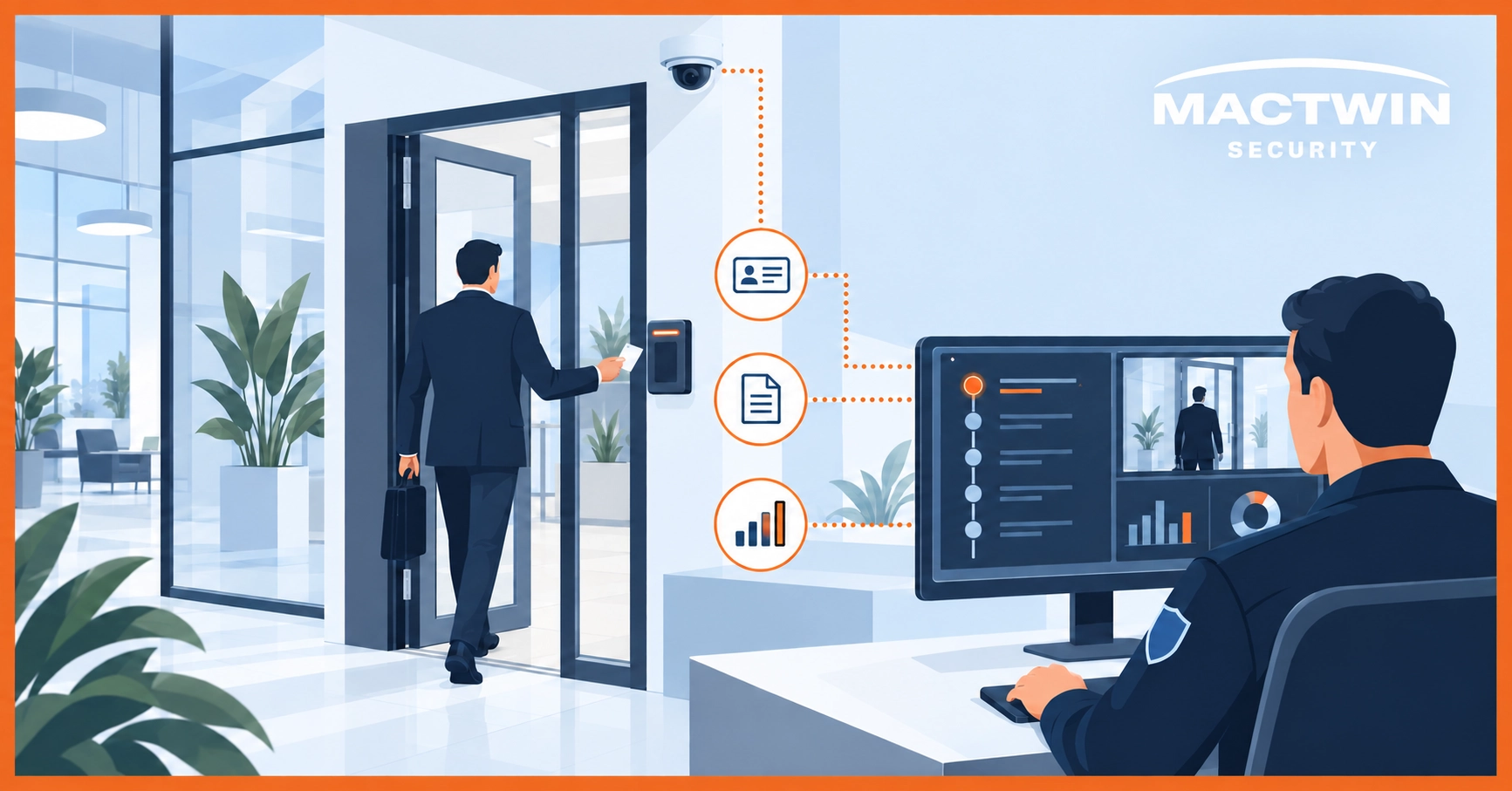
Access logs, changes in authorizations, and administrator actions can help detect anomalies and investigate incidents. To achieve this, it must be clear beforehand which events require attention.
For example, a denied access attempt outside of working hours could be grounds for investigation. The same applies to an unusual change in administrator rights. Who reviews such a notification, what action follows, and where is the handling recorded?
The significance of the data also deserves attention. A record of a presented access badge does not, in itself, prove who actually entered a room.
Depending on the risk, additional measures may be necessary, such as identity verification or tailgating detection. By connecting relevant events, review, and follow-up, a verifiable process is created. This supports both daily security and retrospective accountability.
Camera footage requires careful management
Camera footage in which individuals are identifiable constitutes personal data. Therefore, careful use of cameras begins with a clear purpose, a valid legal basis, and an assessment of necessity and proportionality.
Subsequently, this assessment must be reflected in the setup and use. Who is allowed to view live feeds, search through recorded footage, or export images? Under what conditions? And how long is the footage retained?
Role-based rights, logging of consultations and exports, and automatic deletion can support these agreements. These settings also require periodic checks. A new camera, a changed purpose, or an expanded user role may be reason to re-evaluate previous choices.