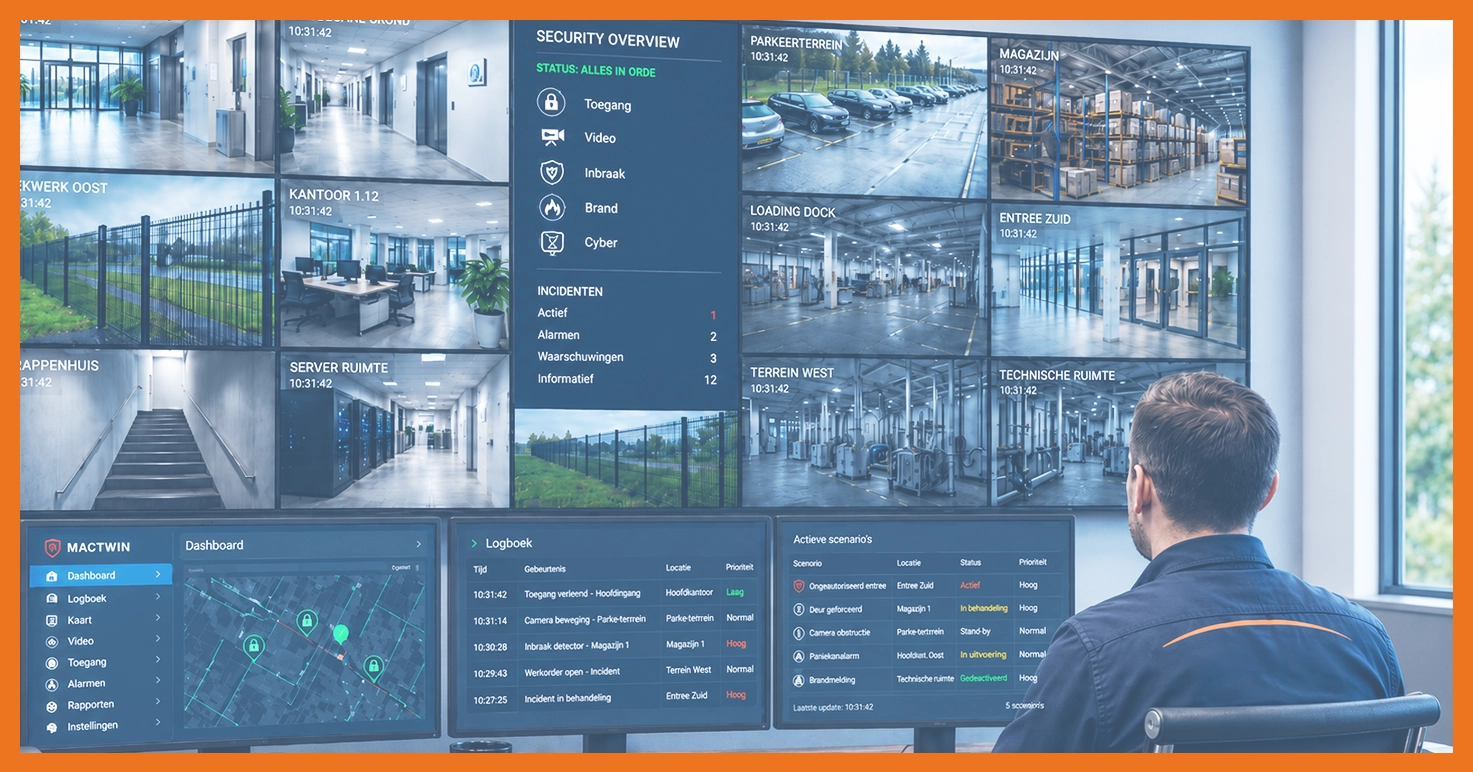





A disruption in a central digital environment does not necessarily lead to immediate data loss, but it can have significant consequences for daily operations. When applications, access processes, or registration systems are temporarily unavailable, organizations must be able to fall back on a workable situation.
This also applies to physical security. Access gates, hand scanners, video surveillance, and local control processes are often connected to central systems. If that connection is lost, the question arises whether the security function remains sufficiently operational. Can people still enter in a controlled manner? Does it remain visible who is located where? Is there an emergency procedure in place that matches the risk?
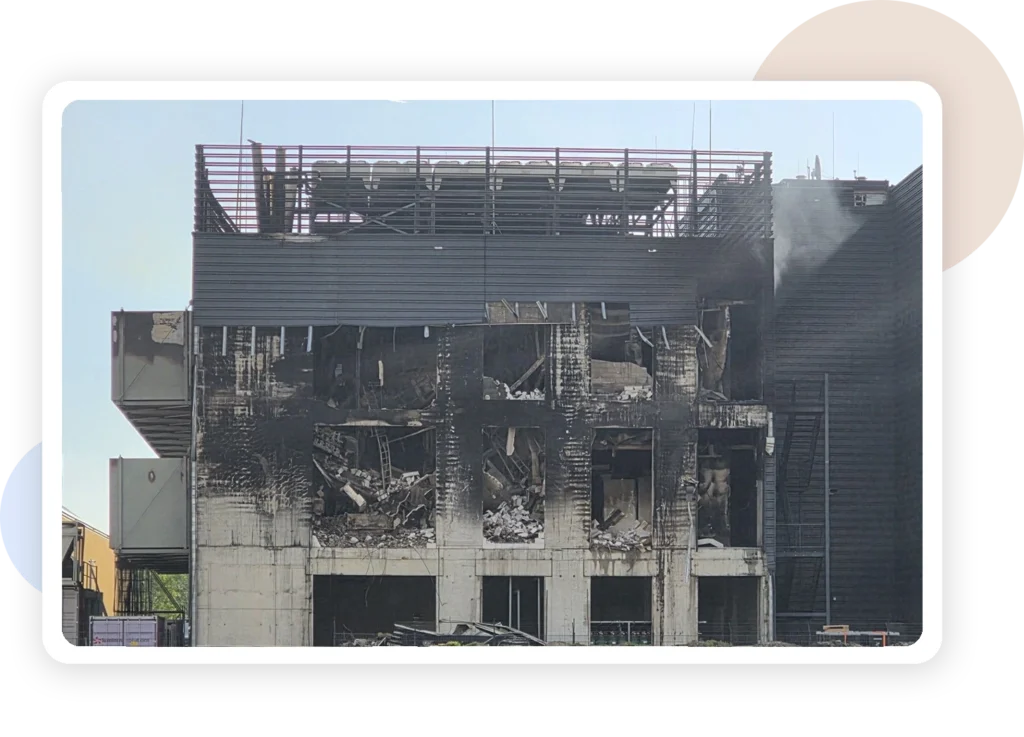
Fire in Almere data center: no suspected data loss, but digital services are down, including access gates and handheld scanners.
(source: the NOS)
Therefore, business continuity should not only be assessed based on data preservation or system recovery, but also on the functional availability of critical processes. This is precisely where the value lies in security systems that can continue to function locally and where temporary fallback measures have been considered in advance.